How High Oil Prices Drive Up Your Grocery Bill – A Full 2026 Price Breakdown
 By George · Published April 15, 2026
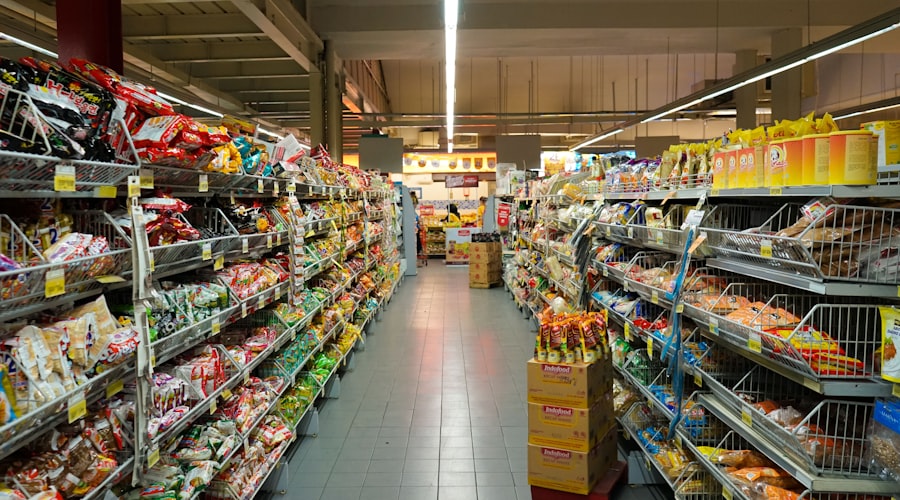
Everyone feels it the moment they walk out of the grocery store — the bags are lighter, but the receipt is heavier. Food prices in the US have climbed significantly over the past three years, and one of the most persistent drivers isn't drought, labor shortages, or even corporate greed, though people argue about all of those. It's something you pump into your car every week: oil. The price of crude oil quietly sits behind the cost of almost every item in your grocery cart, from the bread on the shelf to the strawberries that flew in from California. Understanding exactly how oil affects food prices — and which products are hit the hardest — is the first step toward shopping smarter when energy markets are volatile.
From the diesel that runs farm equipment, to the natural gas that produces fertilizer, to the trucks that move food across the country, to the plastic packaging it arrives in — crude oil and its derivatives are embedded at every point between the field and your fork. When oil prices spike, those costs ripple forward until they land on your grocery receipt.
The Five Ways Oil Raises Your Food Bill
Most people think of fuel for delivery trucks when they hear "oil prices affect food." That's real, but it's actually just one of five distinct pathways through which energy prices feed into grocery costs. Knowing all five helps you understand why some food categories rise faster than others when oil spikes.
1. Farm Equipment and Fuel
Modern farming is mechanized farming. Tractors, combine harvesters, irrigation pumps, and grain dryers all run on diesel. The USDA estimates that fuel accounts for roughly 15–20% of total direct farm operating costs. When diesel prices jumped from an average of $3.24/gallon in early 2021 to over $5.50/gallon at the 2022 peak, farmers absorbed significantly higher costs per acre harvested. Those costs eventually get passed along. Commodity crops like corn, soybeans, and wheat — the base ingredients for almost everything processed — are especially sensitive to farming fuel costs because margins are so thin to begin with.
2. Nitrogen Fertilizer
This one catches most people by surprise. The most widely used fertilizer in the world — nitrogen fertilizer — is made primarily from natural gas through a process called the Haber-Bosch process. Natural gas prices are closely correlated with crude oil prices, and when energy costs soared in 2021–2022, fertilizer prices followed with shocking speed. Urea, the most common nitrogen fertilizer, went from roughly $300 per ton in mid-2020 to over $900 per ton at the 2022 peak. That's a 200%+ increase, and it directly raises the cost of growing corn, wheat, rice, and vegetables. Fertilizer costs rippled into food prices through 2023 and 2024, and remain elevated today.
3. Transportation and Logistics
The US food system is built around long-distance trucking. The average ingredient or finished food product travels 1,500 miles before it reaches your store. Every mile of that journey runs on diesel. When the national average diesel price rises by $1/gallon, it adds approximately $0.06 to the cost of every mile for an 18-wheeler. For a cross-country food shipment, that's several hundred dollars per load. Carriers build those costs into freight rates, distributors mark up the higher freight costs, and retailers pass along margin to protect profitability. The consumer pays at the end of that chain.
4. Food Processing and Manufacturing Energy
Food processing plants are energy-intensive operations. Baking, pasteurization, refrigeration, freezing, cooking, and packaging all consume large amounts of electricity and natural gas. The cost of industrial electricity in the US is loosely but consistently tied to natural gas prices, which in turn track crude oil markets. Processing-heavy categories — packaged bread, frozen meals, canned goods, processed cheese — carry more embedded energy cost than fresh whole foods. This is one reason why processed food prices often rise faster than fresh produce when energy markets are tight.
5. Petrochemical Packaging
Almost all flexible food packaging — the plastic wrap on meat, the film bags holding chips and pasta, the plastic bottles for cooking oil and salad dressing — is made from petrochemicals derived directly from crude oil. When oil prices are high, the feedstock for packaging gets more expensive. That cost is layered on top of the product itself. It's a smaller line item than fertilizer or transportation, but it's consistent across virtually every packaged product in the store and it compounds the other effects.
Before vs. After: Food Price Comparison Table
The table below compares average US retail prices for common grocery items across three time points: pre-2021 baseline (when oil was trading around $45–55/barrel), the 2022–2023 peak (oil above $90–110/barrel), and current April 2026 prices (with oil stabilized around $90–100/barrel but supply chain costs still elevated). Prices are based on national average retail data from USDA ERS, BLS Consumer Price Index food reports, and major grocery chain shelf surveys.
| Food Item | Unit | Price 2020 (Pre-Spike) | Price 2022–23 (Peak) | Price Apr 2026 | Change vs. 2020 |
|---|---|---|---|---|---|
| White Bread (sliced) | 20 oz loaf | $1.28 | $2.15 | $2.09 | +63% |
| Whole Milk | 1 gallon | $3.25 | $4.49 | $4.12 | +27% |
| Large Eggs | 1 dozen | $1.48 | $4.82 | $3.65 | +147% |
| Chicken Breasts (boneless) | per lb | $2.89 | $4.99 | $4.35 | +50% |
| Ground Beef (80% lean) | per lb | $4.05 | $5.79 | $5.49 | +36% |
| Vegetable Oil | 48 oz bottle | $2.49 | $6.29 | $4.89 | +96% |
| Butter (salted) | 1 lb (4 sticks) | $3.29 | $5.49 | $5.19 | +58% |
| Dry Pasta (spaghetti) | 16 oz box | $0.99 | $1.89 | $1.69 | +71% |
| Canned Tomatoes (diced) | 14.5 oz can | $0.89 | $1.49 | $1.39 | +56% |
| Breakfast Cereal | 18 oz box | $3.49 | $5.79 | $5.29 | +52% |
| Cheddar Cheese (block) | 16 oz | $3.99 | $6.49 | $5.99 | +50% |
| Bananas | per lb | $0.57 | $0.72 | $0.69 | +21% |
| Apples (Gala) | per lb | $1.29 | $2.05 | $1.89 | +46% |
| Orange Juice (100%) | 52 oz carton | $3.59 | $6.49 | $7.19 | +100% |
| Ground Coffee | 11 oz bag | $5.99 | $9.49 | $9.99 | +67% |
| Potatoes (russet) | 5 lb bag | $3.29 | $5.99 | $5.49 | +67% |
| Peanut Butter | 16 oz jar | $2.49 | $4.39 | $3.99 | +60% |
| Vanilla Ice Cream | 48 oz container | $3.49 | $5.99 | $5.49 | +57% |
| Sources: USDA ERS, BLS CPI Food Reports, national grocery chain shelf price surveys. Prices are national averages and may vary by region and retailer. | |||||
A few things jump out of that data immediately. First, even though oil prices have pulled back from their 2022 peaks, grocery prices have not fallen back to 2020 levels — and for most items, they're only modestly below the 2022–2023 highs. This is the well-documented "ratchet effect": prices move up fast when input costs rise, but they come down slowly — or not at all — when input costs ease. Retailers and food manufacturers protect margins on the way down in a way they simply can't on the way up. Second, processed and packaged items (pasta, cereal, peanut butter, canned goods) have held their elevated prices longer than fresh produce. That's the embedded packaging and energy-in-manufacturing effect at work.
A Closer Look: Food Categories Most Affected by Oil Prices
Not all grocery aisles are equally sensitive to oil prices. Here's a breakdown of the categories that get hit hardest — and why.

Fresh fruits and vegetables travel enormous distances — from California's Central Valley, from Mexico, Florida, and Chile. Diesel for refrigerated trucks is the dominant cost driver. Produce with longer supply chains (berries, tropical fruits, leafy greens) saw the biggest jumps. Locally sourced items from farmers markets were partially sheltered.

Meat carries the full stack of oil-linked costs: diesel for farm feed delivery, natural-gas-derived fertilizer to grow animal feed, fuel to run cold-chain logistics, and petrochemical packaging. Beef is especially energy-intensive because cattle require large amounts of corn and soy feed — both of which are themselves fuel and fertilizer-sensitive crops.
Packaged foods carry more embedded energy than any other category: energy for manufacturing processes, natural-gas-heated ovens, refrigerated warehouses, and petroleum-derived packaging film. Breakfast cereals, chips, crackers, and frozen meals have seen some of the largest sustained price increases. And unlike fresh produce, prices here have barely budged back down.

Dairy farms run on diesel for equipment and natural gas for heating, milk pasteurization, and refrigeration. Feed costs for dairy cows track energy prices closely. Butter and cheese — which require energy-intensive processing beyond raw milk — have stayed elevated even as fluid milk prices moderated slightly from peak. Butter in particular sits near all-time retail highs.

Wheat is heavily fertilizer-dependent, bakery ovens run on natural gas, and bread arrives at stores in diesel-powered delivery trucks. Bread prices have more than doubled in some markets. The combination of fertilizer cost inflation affecting raw wheat and natural gas costs affecting baking operations means baked goods carry some of the highest embedded energy costs per dollar of any grocery category.

The most extreme price increases belong here. Vegetable, canola, sunflower, and palm oils are all agricultural products requiring heavy fertilizer inputs, and their global supply was severely disrupted by the Russia-Ukraine conflict (Ukraine is a major sunflower oil exporter). Bottles are also made from petroleum-derived plastics. Vegetable oil nearly tripled at peak. It's come down but remains nearly double 2020 prices.
Why Prices Haven't Come Down Even as Oil Stabilized
This is the question I get most from readers: if oil prices aren't as crazy as they were in mid-2022, why is my grocery bill still so high? There are three main reasons.
Menu Cost Stickiness
Changing prices isn't free for retailers and manufacturers. Every price change requires label updates, system repricing, potential contract renegotiations with suppliers, and risk of customer perception damage. As a result, food companies raise prices quickly when input costs spike (because they have to) but are very slow to lower them when those costs ease (because there's no competitive pressure forcing them to). This phenomenon is well-documented in economic literature under the term "menu costs" and it's a primary reason why food inflation tends to be a one-way ratchet.
Margin Recovery
When input costs first surged in 2021–2022, many food manufacturers and retailers saw their margins compressed before they could pass costs to consumers. Once they successfully raised prices, some used the period of sustained high prices to restore — and in some cases, grow — their margins beyond pre-inflation levels. This is sometimes called "greedflation" in the media, though economists generally view it as a predictable rational response to an opportunity created by cost-push inflation. Either way, the effect is the same: even when input costs drop, prices don't fully follow because companies keep some of the difference as recovered margin.
Compounding Supply Chain Investments
The supply chain disruptions of 2021–2022 prompted major investments in refrigerated warehousing capacity, driver pay, and logistics infrastructure. Those capital and labor investments are now embedded in operating costs that don't shrink when oil gets cheaper. The food industry is now running on a higher structural cost base regardless of what happens to energy prices in any given quarter.
How This Affects Different Income Levels
Food inflation is not neutral across income groups, and it's worth understanding why lower-income households are disproportionately affected even when the percentage price increase is the same for everyone. A household spending $800/month on groceries that sees a 38% increase faces $304 per month in additional costs — a significant burden if that represents 15–20% of take-home income. A household spending the same $800/month but with much higher income has the same nominal increase but a fraction of the proportional hit.
Additionally, lower-income households are more reliant on precisely the categories that have seen the highest price increases: packaged staples, bread, cooking oils, and protein. They're also less able to shift to higher-end substitutes or absorb one-time bulk purchase savings. The result is that food insecurity in the US has risen meaningfully since 2021 even though the economy by most GDP measures has been doing reasonably well.
The connection between oil and food prices was first studied seriously after the 1973 OPEC oil embargo, which triggered the first global food price crisis. Economists have documented oil-food price co-movement in every major energy price event since: 1979, 1990, 2007–2008, and 2021–2022. What's different now is the scale of the modern food supply chain's oil dependency — a result of five decades of consolidation, globalization, and industrialization of agriculture.
What You Can Do About It: Practical Shopping Strategies

You can't control global oil markets. But you can make smarter decisions about how you shop, what you buy, and when you buy it — and those decisions add up to hundreds of dollars per year in savings even at elevated price levels.
- Buy what's seasonal and locally grown. Local produce skips the long-haul refrigerated trucking that accounts for a large chunk of food's embedded energy cost. Seasonal availability means supply is abundant and prices are lower. Farmers market prices aren't always cheaper than grocery stores, but for in-season peak items like summer tomatoes, corn, and berries, they often are.
- Stock up on shelf-stable staples during sales. Pasta, canned tomatoes, peanut butter, dried beans — these items have high embedded energy costs but long shelf lives. When they go on sale at 30–40% off regular price, buying several units locks in a price you won't see again for weeks. Use weekly ad cycle tracking to catch these deals at the right time.
- Switch protein sources strategically. Eggs and dried legumes (lentils, chickpeas, black beans) provide excellent protein at a fraction of the cost of beef or chicken. Even with the dramatic egg price increases of 2022–2023, eggs remain among the cheapest per-gram-of-protein options available. A $3.65 dozen of eggs delivers 12 servings of high-quality protein — still a better value than anything in the meat case.
- Reduce reliance on packaged processed foods. Packaged items carry the highest embedded energy costs and their prices are the stickiest. Whole-ingredient cooking is genuinely cheaper at current price levels. A batch of homemade pasta sauce from canned tomatoes, onion, and garlic costs far less than a jar of branded marinara — and the gap has widened as brand manufacturers have held elevated prices.
- Use the savings calculator and price-match strategically. Our savings calculator can help you estimate how much you'd save by switching stores or buying during sales weeks. Price matching at stores like Walmart and Target means you don't necessarily have to drive to a different store — you just need to know what the competition is charging.
- Take a second look at store brands. Private-label store brands typically run 20–30% below national brand prices. During this period of elevated food costs, many store brands have actually improved in quality as retailers invested to grow their margins. The gap between national brand and store brand has arguably never been a better deal for consumers willing to make the switch.
- Watch cashback app cycles. Apps like Ibotta, Fetch, and Checkout 51 often have their best offers on categories that have seen significant price increases — cooking oils, dairy, proteins — because manufacturers are trying to maintain volume at high shelf prices. Stacking a cashback offer with a sale price can bring items close to or even below their 2020 levels in effective cost.
- Buy protein in bulk and freeze it. The freezer is one of the most underused weapons against food inflation. When chicken breasts, ground beef, or pork chops hit their weekly sale price floor — usually $1.50 to $2/lb below regular price — buying the maximum sale quantity and freezing it is one of the highest return-on-time activities in grocery shopping. You're essentially locking in a forward price on an item you'll definitely consume.
Looking Ahead: Will Food Prices Come Down?
The honest answer is: not by much, and not quickly. Even if crude oil prices were to fall significantly from current levels, the structural cost increases embedded in the food supply chain — higher driver wages, increased warehousing costs, investment in supply chain resilience — will remain. Fertilizer prices have come down from peak levels but remain well above 2020 baselines. The ratchet effect in grocery pricing means that what has gone up tends to stay up unless a severe recession forces demand destruction.
The more realistic expectation is that food prices will be relatively stable near current levels for the next year or two, with seasonal fluctuations and occasional sale-driven discounting, but no broad return to 2019 or 2020 price levels. Agricultural economists at the USDA project food-at-home inflation in the 2–4% annual range through 2027 — slow enough that it won't make headlines, but compounding on top of the 38% cumulative increase already absorbed since 2020.
What that means practically: the shopping habits that save money today — seasonal buying, bulk purchasing on sales, protein substitution, store brand adoption, cashback stacking — aren't a temporary workaround. They're the new normal for consumers who want to keep their grocery budget from slowly inflating alongside everything else.
The link between oil prices and food costs is real, deep, and persistent. The current elevated price environment for groceries is a structural feature of a food system that was built assuming cheap energy — and that assumption no longer holds. Shopping smarter isn't a special effort anymore; it's the baseline skill required to manage a household food budget effectively in 2026.